
As a child in the 1960s, I remember the ‘mini’ jokes… How many elephants can you fit in a mini? Two in the front and two in the back, obviously. And, how do you get two whales in a mini? One in the back and one in the front? No silly, to Wales, across the Severn Bridge. Minis were an icon of that era, and so was the Severn Bridge, which opened in a blaze of glory in 1966. It made access to places in South Wales an easy drive from Bristol. And first stop would be Chepstow, a picturesque town rich in history on the banks of the River Wye. There is so much to see and do in Chepstow, whether it’s exploring medieval history at the castle, hiking scenic river trails, or enjoying the vibrant local culture and indie shops.
Article Contents
Chepstow Castle
One of the town’s most iconic landmarks is Chepstow Castle, a long linear Norman fortress perched on cliffs above the river. It was built in 1067, soon after the Battle of Hastings, at the request of William the Conquerer, and provides a glimpse into the region’s tumultuous past.

The castle was a key stronghold on the border between England and Wales, known as the Welsh Marches. It guarded the River Wye crossing and the main route into South Wales, controlling movement, collecting tolls, and defending against Welsh uprisings. It formed part of a chain of so-called ‘marcher castles,’ including Abergavenny and Monmouth, held by English-speaking lords with delegated powers to govern and defend the borderlands.
Legends on film
The castle ruins and dramatic riverside setting have attracted film and TV crews seeking an authentic medieval backdrop. Welsh bands, Manic Street Preachers and Stereophonics, have both filmed videos here. It was used for the Doctor Who 50th anniversary episode, and the BBC Arthurian series, Merlin, in 2008–2012. And in 2010, Robin Hood, directed by Ridley Scott, was filmed in the Wye Valley area.
On Bridge Street, near the castle, you’ll find Chepstow Museum, housed in a substantial Georgian building. It features displays revealing the history of Chepstow and the River Wye, with photos and artefacts about fishing, and shipbuilding. I was very impressed by the reconstruction of a Victorian schoolroom and a hospital ward, plus an old coracle boat used to cross the river. There is also a collection of paintings by artists who toured the Wye in the 18th and 19th centuries.

St Mary’s Church is a short walk away, with old stonework and the remains of a priory.
Artisan shops
Chepstow is a compact town, which can easily be explored on foot within a few hours. At its heart is the medieval core beneath the castle, with an arch through the town wall, and narrow lanes including Moor Street, High Street and The Narrow. There are historic timber-framed buildings and Georgian houses, and streets lined with small independent and artisan shops. One local story is that JK Rowling, who went to nearby Wyedean School, based Diagon Alley on one of the streets which wind through the old town.

Over the centuries, the town became a busy port for the timber, iron and coastal trade. The old quay and warehouses on the river are now home to cafés and art galleries. Regular markets and seasonal festivals highlight Welsh produce and crafts. While local bands and classical concerts are hosted at the town bandstand on the riverside. The Wye Valley Festival is a highlight of the year, taking place in May, with events celebrating the culture of the river.
Riverside walks
Chepstow’s location makes it an ideal destination for outdoor enthusiasts. The Wye Valley, designated as an Area of Outstanding Natural Beauty, is perfect for hiking, cycling, and river activities. The Wye Valley Walk, which passes through the town, is a 136 km (about 85 miles) waymarked long-distance path. It follows the River Wye from Chepstow to Plynlimon, taking hikers through dramatic limestone gorges, ancient woodlands, and riverside meadows. It also runs alongside historic sites like Tintern Abbey and Goodrich Castle.

The terrain is varied, from easy riverside sections to steeper uphill stretches. The route is usually tackled in stages, day-walks or multi-day treks, with frequent access points, pubs and campsites. Best times to walk are spring to see a variety of wildflowers, or autumn for the stunning tree foliage. The river ecosystem attracts dippers, kingfishers and grey wagtails near fast water, and herons and waders on the mudflats at lower tides. Look for signs of otters at quieter bends and watch for peregrine falcons on exposed cliff faces in the gorge.
Tintern Abbey
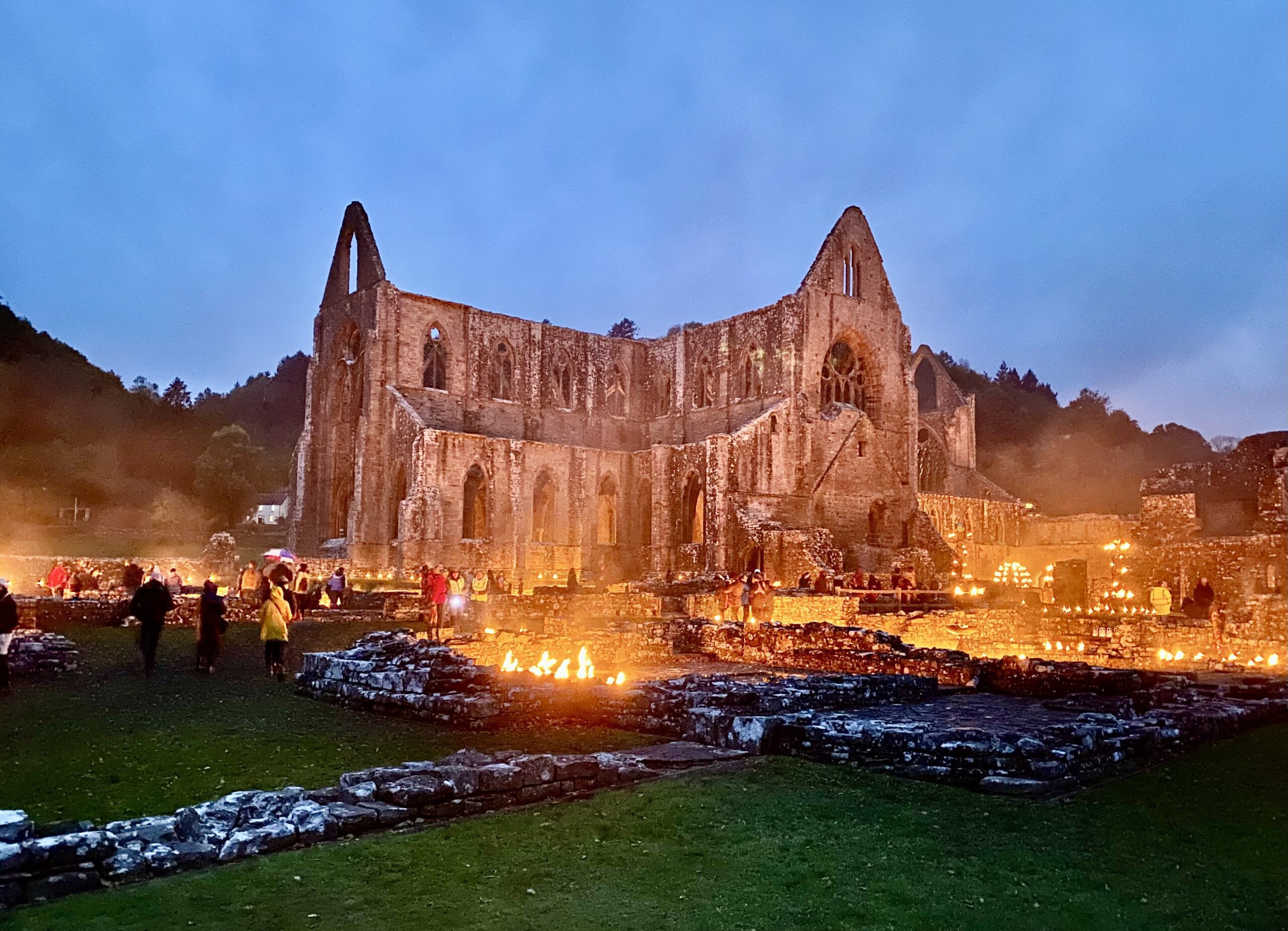
In the 18th century, the Wye Valley became one of Britain’s first “picturesque” tourist destinations. And by the Victorian era, the Wye Tour was a popular trip, with boat rides and guided visits to Chepstow Castle and Tintern Abbey. Whether approaching by road or on foot, seeing Tintern Abbey loom into vision on a sheltered loop of the River Wye is a spectacular sight. It was built as a Cistercian abbey in 1131, but dissolved in 1536 during Henry VIII’s dissolution of the monasteries.

What you’ll see today is the lofty nave, east window tracery, and cloister foundations. The soaring ruins, framed by tree-lined riverbanks, create the composition that has captivated visitors and artists for centuries. William Wordsworth celebrated the valley’s dramatic scenery in, “Lines Composed a Few Miles above Tintern Abbey”. The poem, written in 1798, uses the ruins as a springboard for meditation on memory, nature and the self. Other writers and painters, J.M.W. Turner among them, made the abbey a subject in the Romantic movement’s art and guidebooks, shaping ideas about the pastoral sublime.
Plan a visit
There is plenty to see and do in Chepstow and the surrounding area, and it’s worth planning a trip for a few days. For train travel, Chepstow has a railway station, with regular connections from Cardiff and Bristol. And if driving, the quickest way is across the old Severn Bridge, now signposted as the M48.
There are several boutique hotels and guesthouses in Chepstow and the Wye Valley, including, the Beaufort Hotel, a historic coaching‑inn in the centre, and Two Rivers Lodge on the edge of the town. The St. Pierre Country Club is a luxury country‑house hotel a few miles drive from the town, with a spa, pool and golf course . The Royal George is a riverside inn a short drive upstream from Tintern, with atmospheric rooms and good food.
Check out my article on Bristol, for more details on places to visit in the city and surrounding area.
